Solar makes power. Net metering sells the extra.
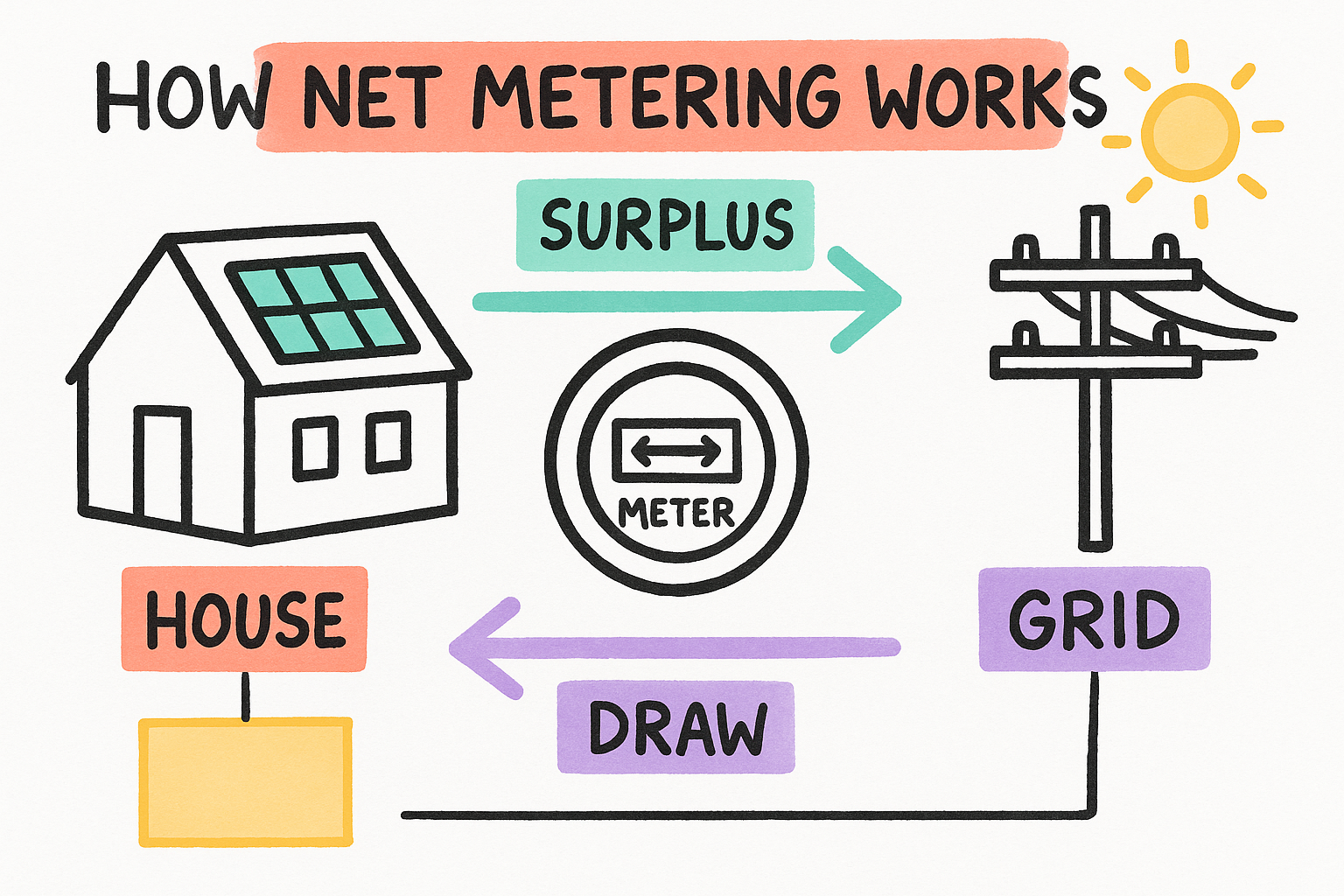
When your solar panels generate more electricity than your home is using, that surplus flows back into the grid. Your utility company credits you for every kilowatt-hour you send back. At night or on cloudy days, you draw from the grid and those credits offset what you owe. The meter literally runs backward when you are producing more than you use.
- Surplus power flows out to the grid automatically.
- Credits accumulate on your account in real time.
- You draw from the grid when panels cannot keep up.
The bidirectional meter tracks both flows
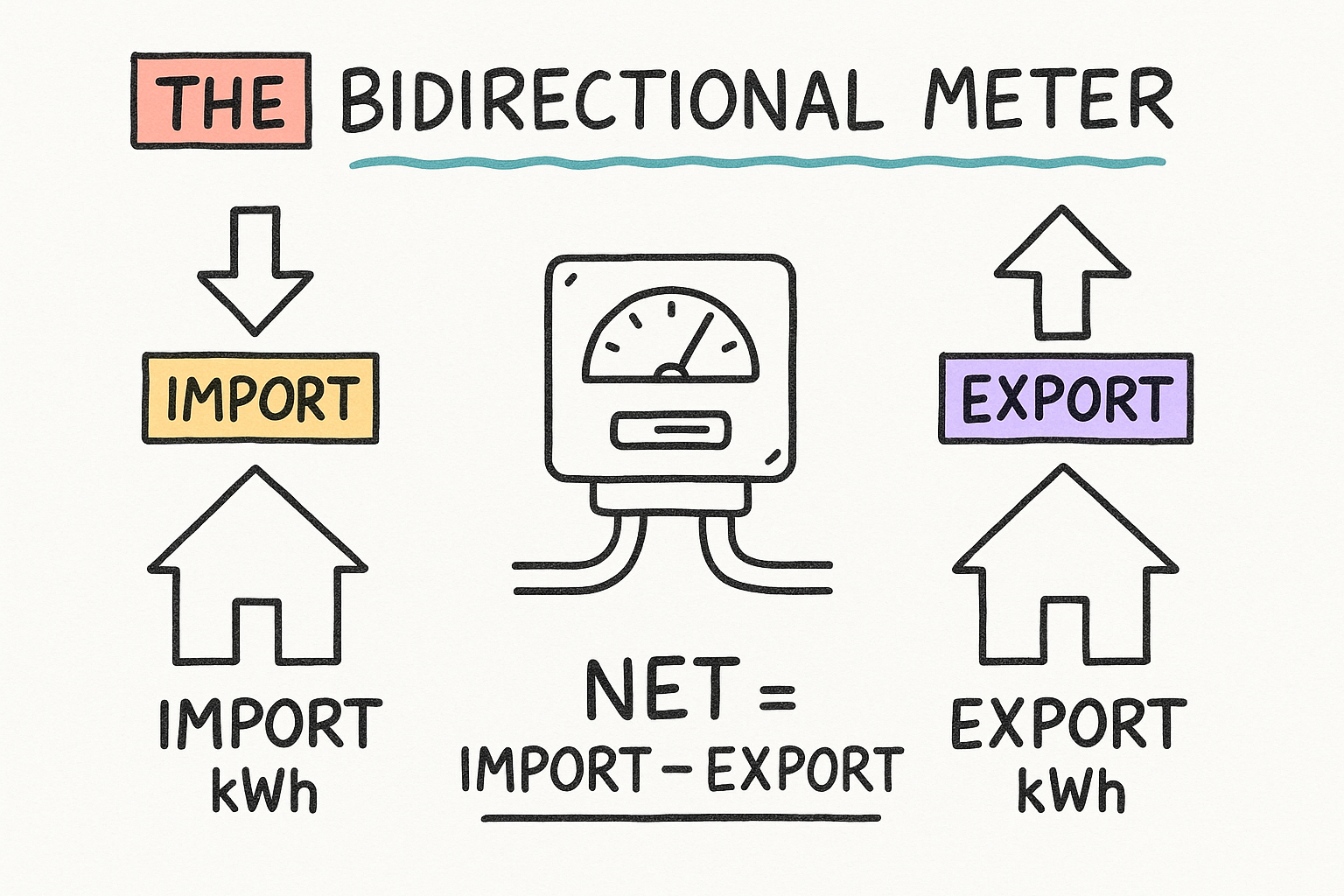
A standard electric meter only counts power coming in. A net metering setup uses a bidirectional meter that counts kilowatt-hours in both directions: power you consume from the grid, and power you export to it. The math is simple: consumption minus export equals your net usage for the billing period.
- Import channel: grid power you consume.
- Export channel: solar surplus you send back.
- Net = import minus export. That is what you pay for.
Credits roll over. Zero floor, not a check.
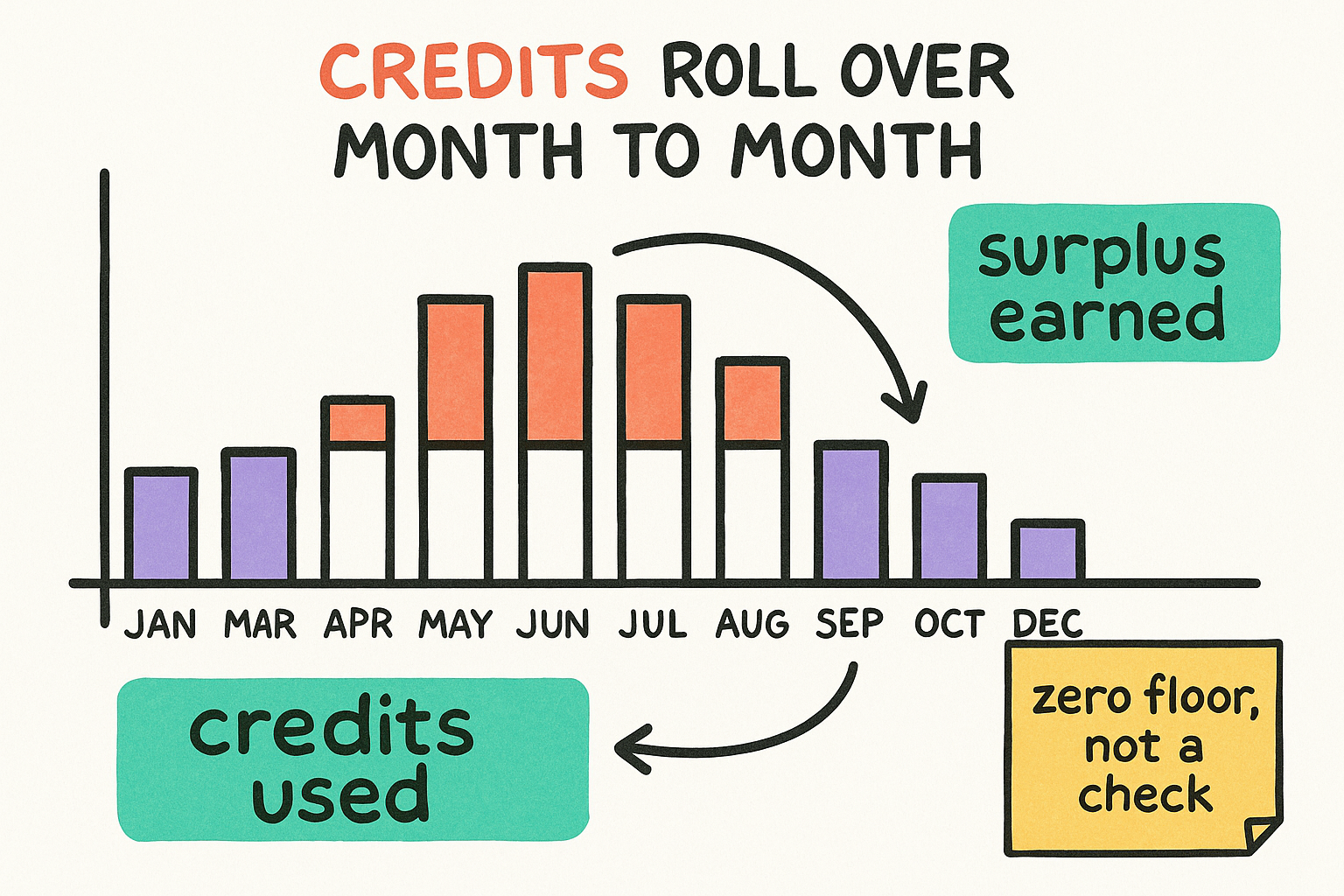
Most utilities credit your surplus at the retail electricity rate, the same rate you pay to buy power. Unused credits typically roll over month to month. At the end of the year many utilities zero out any remaining balance rather than cutting a check, so sizing your system to match your annual consumption maximizes value.
- Credits offset future bills, not cash payouts.
- Monthly rollover means summer surplus covers winter.
- Right-sized system = maximum payback speed.
Net metering rules vary. Check your state.
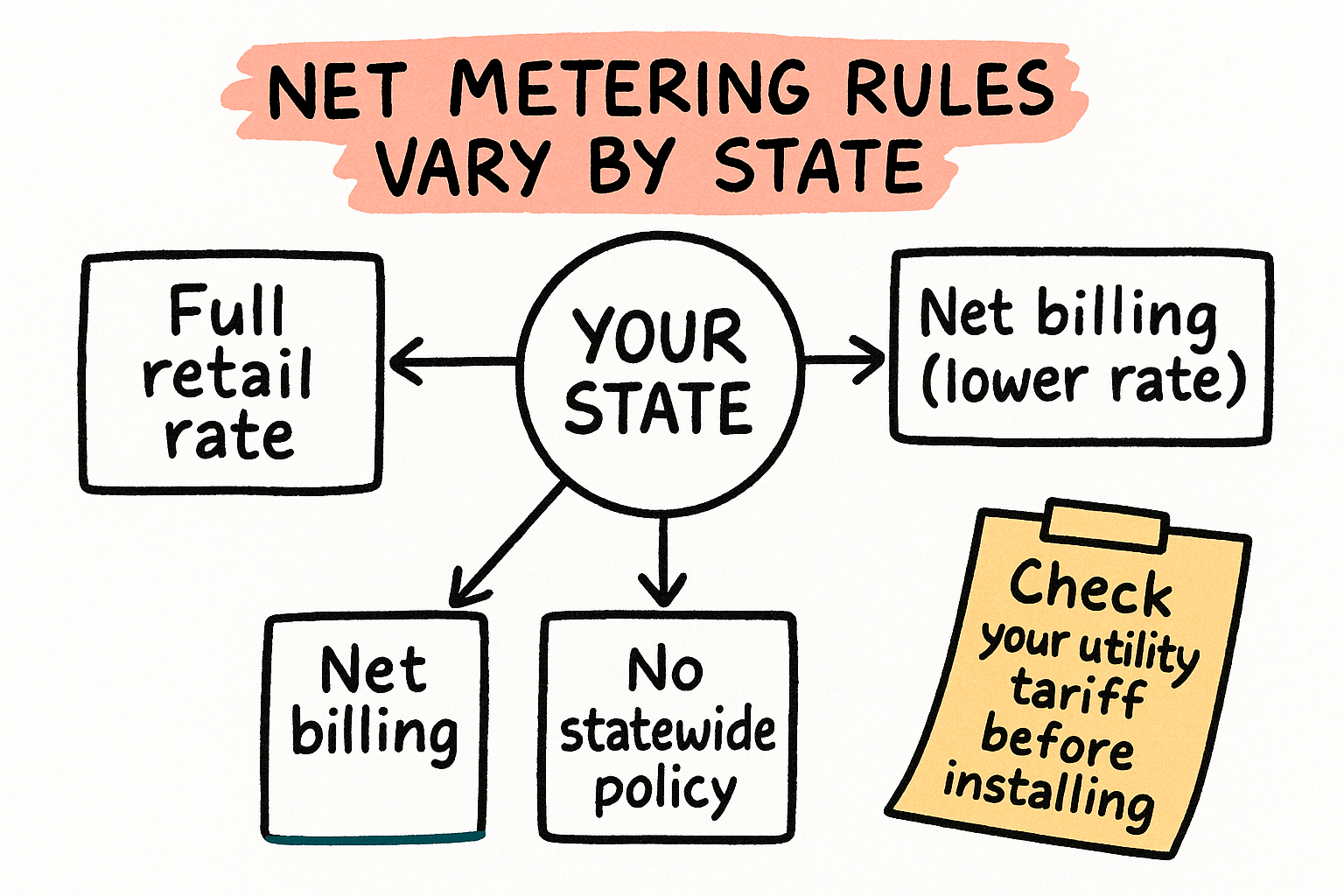
Net metering policy is set at the state and utility level. Some states mandate full retail-rate credits. Others offer net billing at a lower avoided-cost rate. A handful have no statewide policy at all. California's NEM 3.0 shift in 2023 dramatically cut export credits. Always verify your utility's current interconnection tariff before sizing a system or signing a contract.
- Check your state's current net metering law.
- Utility tariffs change. Confirm before installing.
- NEM 3.0 (CA 2023) shows how fast rules can shift.